
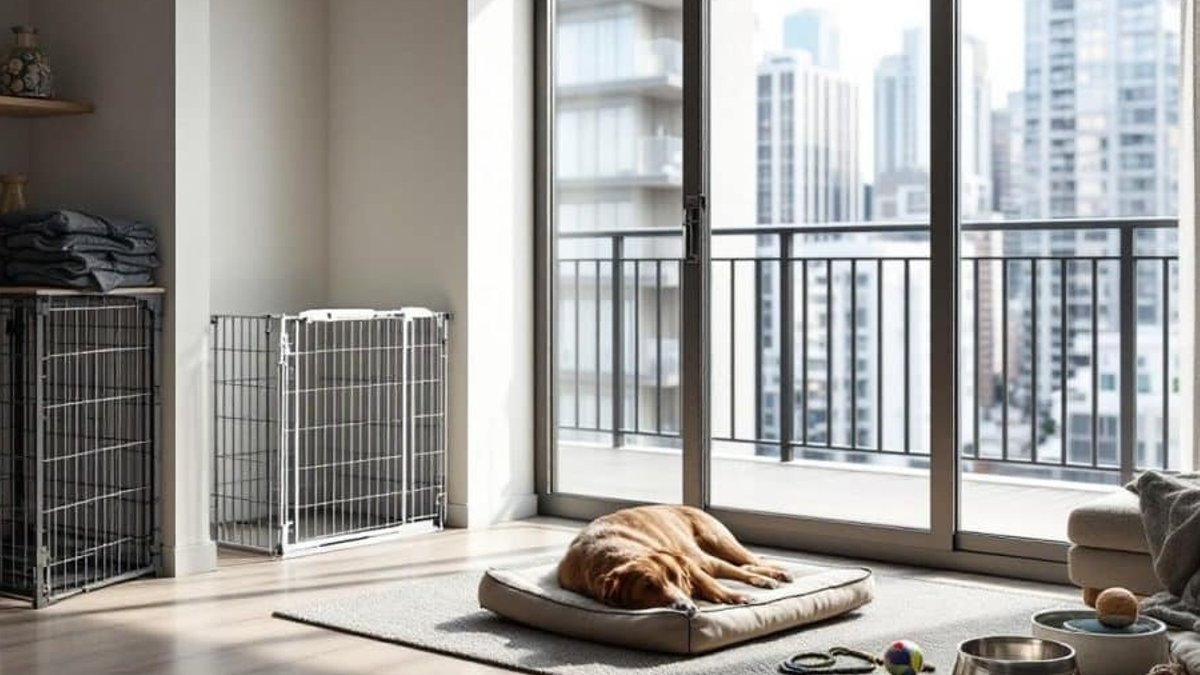
Living with a dog in an apartment can be challenging, from noise complaints to limited space. However, with the right strategies, city living doesn’t have to mean sacrificing your dog’s happiness or your peace of mind. This guide provides practical tips for apartment dog owners, including flooring choices, exercise routines, and neighbor relations.
Making your apartment safe and comfortable for your dog is important. Hard flooring like tile or laminate works better than carpet for apartment dogs because it’s easier to clean accidents and reduces odors.
Your apartment’s physical setup determines whether your dog thrives or struggles with city living. If you have carpeted areas, use washable rugs that you can replace quickly, and consider baby gates to restrict your dog’s access to carpeted zones until potty training is solid.
A dog bed, crate, or quiet corner signals safety and reduces stress-related behaviors like excessive barking or destructive chewing. Position this space in a low-traffic zone, not near the main entrance or next to thin walls shared with neighbors.
Window treatments matter more than most apartment dog owners realize. Direct sunlight heats your apartment quickly, and dogs can’t regulate body temperature like humans do. Thermal-blocking curtains or cellular shades reduce heat buildup and UV exposure, which can damage your dog’s eyes and skin over time.
Closing these treatments during the hottest hours, typically between 11 a.m. and 4 p.m., keeps your dog’s resting area comfortable and prevents heat stress, which poses particular danger for brachycephalic breeds like French Bulldogs.
Related: Rescue Teams Give Dogs New Lives Spur Adoption
Beyond window treatments, you can manage your apartment’s overall environment to support your dog’s comfort. Soft background noise, like a fan or calm music, helps acclimate your dog to apartment sounds and reduces reactions to hallway activity or neighboring units.
Maintaining consistent room temperature is also important, as dogs experience discomfort in spaces that fluctuate between hot and cold. Fresh water bowls placed in multiple locations encourage hydration, which supports their ability to cool themselves naturally.
As the dog’s environment is optimized, the next step involves establishing routines that keep your dog active and mentally engaged throughout the day. Urban dogs spend significantly more time indoors than suburban counterparts, which means exercise becomes your primary tool for preventing destructive behavior and managing excess energy.
Urban dogs spend significantly more time indoors than suburban counterparts, which means exercise becomes your primary tool for preventing destructive behavior and managing excess energy.
Filling workday hours with mental stimulation is critical, as interactive toys address the gap by converting idle time into mental stimulation that genuinely tires dogs out. Rotating three to five different puzzle toys weekly rather than leaving the same toy available constantly drives engagement.
Barking complaints trigger more lease violations than any other pet-related issue in apartment buildings, which means you must address noise early to prevent conflict. Identifying your dog’s specific barking triggers and implementing the corresponding solution is key.
Related: Frequent bathroom trips signal workplace issues
Training your dog to wait calmly in elevators and walk past other residents without lunging or excessive noise matters equally to managing barking. Use a six-foot leash in shared spaces and reward calm behavior with treats immediately when your dog ignores distractions.
Understanding your lease and local regulations is also vital, as many buildings cap dogs at 45 to 50 pounds, which eliminates larger breeds entirely. Reading these details before adopting prevents the devastating situation where you fall in love with a dog your lease prohibits.
Connecting with other dog owners in your building creates informal support networks that benefit everyone. Asking your building management for contact information of other dog owners or posting a note on the community board suggesting a monthly dog owner meetup can lead to practical arrangements and social pressure that keeps everyone accountable to responsible pet ownership standards.
Apartment living with a dog succeeds when you commit to creating a physically comfortable space, maintaining consistent exercise and mental stimulation, and building positive relationships with neighbors.
The reality of city living means your dog depends entirely on the routines and environment you establish. Unlike suburban dogs with yard access, apartment dogs cannot self-regulate their exercise or find mental stimulation independently. This responsibility falls completely on you, which actually simplifies decision-making because every choice about your apartment setup, walking schedule, and neighbor communication directly impacts your dog’s wellbeing and your lease security.
Starting with the highest-impact changes first, then implementing dog-friendly apartment tips in stages, can help prevent overwhelm. If your dog barks excessively, prioritize identifying the trigger and implementing the corresponding solution before adding other improvements, and consider consulting common mistakes to avoid.


