
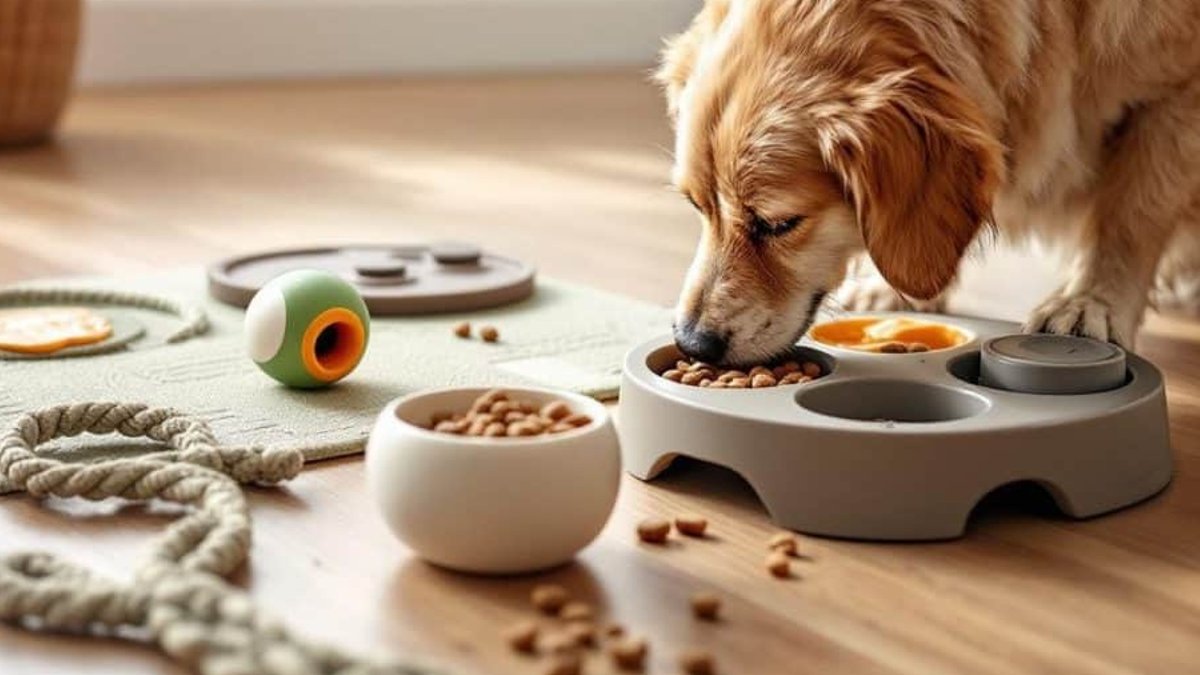
Dogs left without mental or physical stimulation often develop destructive habits like chewing furniture, digging holes, or persistent behavioral problems. Enrichment toys, tailored to a dog’s age, size, and personality, can channel that energy into focused play, easing anxiety and strengthening the owner’s connection with their pet.
How puzzle toys slow fast eaters and sharpen minds
Puzzle toys require dogs to work for their food, making mealtime last longer while engaging their brains. The Kong Wobbler, a self-righting treat dispenser, keeps dogs occupied by rolling unpredictably. Other designs, such as the Toppl and Qwizl, let owners adjust difficulty by adding stoppers or hiding treats deeper inside. These toys also help prevent bloating in fast eaters by slowing their consumption.
Owners should begin with easy puzzles, where treats are partially visible, to help dogs build confidence. Gradually increasing difficulty prevents frustration, particularly for high-energy adolescents or older dogs needing cognitive challenges.
Fetch, chew, and tug: matching toys to a dog’s needs
Fetch toys like the Kong Ring and Goodie Bone are durable enough for aggressive chewers, can be stuffed with treats, and withstand repeated throws. Rope toys, such as the Tug of War Donkey, work well for interactive play but need supervision to avoid fraying.
Chew toys support dental health and stress relief. Hard chews, like deer antlers, risk tooth fractures, though rounded sections may last longer. Flavored options, such as the Benebone Wishbone, hold a dog’s attention better than plain alternatives. Rotating toys every few days maintains novelty, while power chewers may need more frequent replacements.
A dog’s preferences determine the best toy. A 70-pound Labrador might enjoy a Kong Ring, but a 10-pound Chihuahua could struggle to grip it. Watching whether a dog prefers shredding, chasing, or problem-solving helps narrow choices. Durability varies—what lasts for one dog might not survive a day with another.
Related: How to help a grieving pet
Introduced thoughtfully, enrichment toys can reshape behavior over time. The challenge lies in selecting one that matches the dog’s natural tendencies. A herding breed might ignore a chew toy in favor of a fetch ball, while a terrier could spend hours dismantling a cardboard puzzle. Starting simple, adjusting as the dog improves, and rotating toys keeps them engaging.
Safety and selection: what works for real dogs
The Kong Wobbler, Toppl, and Qwizl are among the most durable and adjustable puzzle options. For fetch, the Kong Ring stands out for its toughness, while the Goodie Bone also serves as a treat dispenser. Hard chews require caution—antlers may fracture teeth, though flavored alternatives like the Benebone often last longer.
Supervision is critical with new toys, especially for aggressive chewers. Regular inspections for damage or loose parts prevent choking hazards. A toy that suits one dog might fail for another, so durability must match chewing intensity. Rotating three to five toys at a time extends their lifespan and keeps dogs interested without overwhelming them.
Dogs with consistent access to these toys show fewer signs of anxiety, better impulse control, and improved sleep. Shared play and problem-solving sessions can also deepen the relationship between dog and owner. The most effective toy isn’t always the priciest or highest-rated—it’s the one the dog actually uses.
Owners preparing their homes for a new pet should consider these factors to ensure a smooth transition.


