
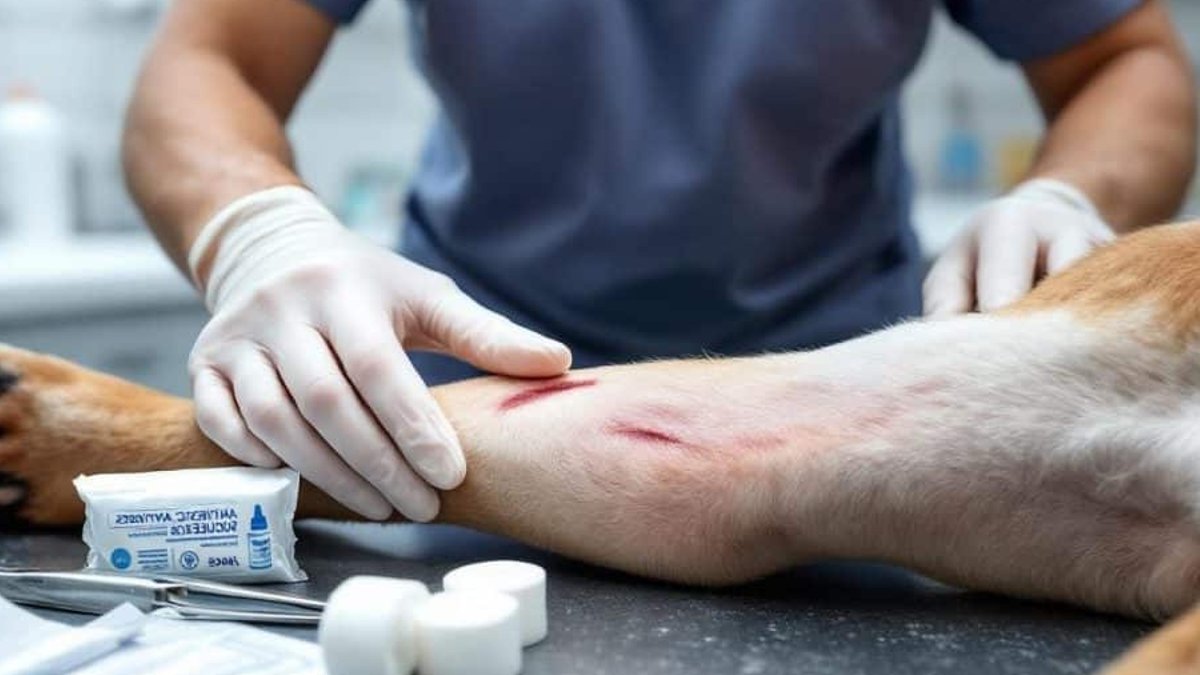
Dog bite wounds on canines require immediate attention to prevent infection and ensure proper healing. At DogingtonPost, a practical guide outlines essential steps for handling these injuries at home while identifying when professional veterinary care becomes necessary.
Immediate First Aid for Dog Bite Wounds
The initial minutes after a bite injury are critical. To control bleeding, apply direct pressure using a clean cloth or sterile gauze, wrapping the affected area securely. Maintain pressure for 5–10 minutes without checking progress, as lifting the cloth disrupts clotting. If bleeding persists beyond ten minutes, reapply fresh gauze and continue pressure for an additional five minutes.
Once bleeding slows, rinse the wound with cool running water and mild soap, working the solution into the bite for at least thirty seconds per Mayo Clinic recommendations. This removes bacteria and debris that could cause infection. Gently pat the area dry with a clean towel, avoiding rubbing. Apply a topical antibiotic like bacitracin to the cleaned wound, then cover it with a sterile bandage to protect against further contamination. Change the bandage daily or when it becomes wet or soiled.
Assessing Wound Severity and Location
The depth and location of a bite determine whether home treatment suffices or veterinary intervention is required. Minor surface injuries with minimal bleeding can often be managed at home. However, deep puncture wounds, severe bleeding unresponsive to 15 minutes of pressure, or bites on high-risk areas like the face, neck, or joints demand immediate professional evaluation.
Bites near sensitive structures pose unique risks. Facial injuries may lead to scarring or damage to eyes or ears, while neck wounds could spread infection toward vital organs. Joint bites risk septic arthritis, potentially causing permanent damage. Paw pad injuries are particularly concerning due to nerve endings and limited blood flow, which can delay healing and hide infections.
Signs of infection typically emerge within days after a bite. Monitor for increased swelling, pus or discharge, color changes from red to purple, and localized warmth. Systemic symptoms like fever, lethargy, or loss of appetite signal a serious infection requiring urgent veterinary care.
Read Also: Finding black pug puppies for adoption
Dogs instinctively lick wounds, introducing oral bacteria that delays healing. An Elizabethan collar prevents this behavior until the wound closes completely. Oral antibiotics prescribed by a vet must be completed fully, even if symptoms improve, to prevent antibiotic resistance. Pain management may also be necessary, especially for deep or joint injuries.
Most dog bite wounds heal within 7–14 days with proper care, but infections can develop slowly and resist initial treatment. Documenting bite incidents, including date, location, and vaccination status of involved animals, aids veterinary assessment and future prevention efforts.
Professional Veterinary Care Indicators
Deep puncture wounds require immediate veterinary attention, as surface treatments cannot reach bacteria trapped in tissue. These injuries create holes rather than surface tears, harboring infection risks that topical antibiotics cannot address. Veterinarians employ specialized tools to flush deep wounds thoroughly and may prescribe oral antibiotics to combat internal infection spread.
Multiple puncture marks or significant bruising around the wound signal an urgent situation requiring professional intervention. Bites on the face, neck, or joints demand assessment regardless of initial appearance due to complex anatomy near vital structures.
Ongoing Monitoring and Home Care Practices
Change bandages at least once daily, or more frequently if they become wet or soiled. Clean the wound with soap and water each time, then pat dry with a clean towel to avoid irritating tissue. Apply antibiotic cream or ointment after cleaning, covering the area with fresh sterile bandaging to maintain protection.
Prevent your dog from licking the wound using an Elizabethan collar if necessary. Licking introduces oral bacteria that delays healing significantly and must be stopped until complete closure occurs.


