
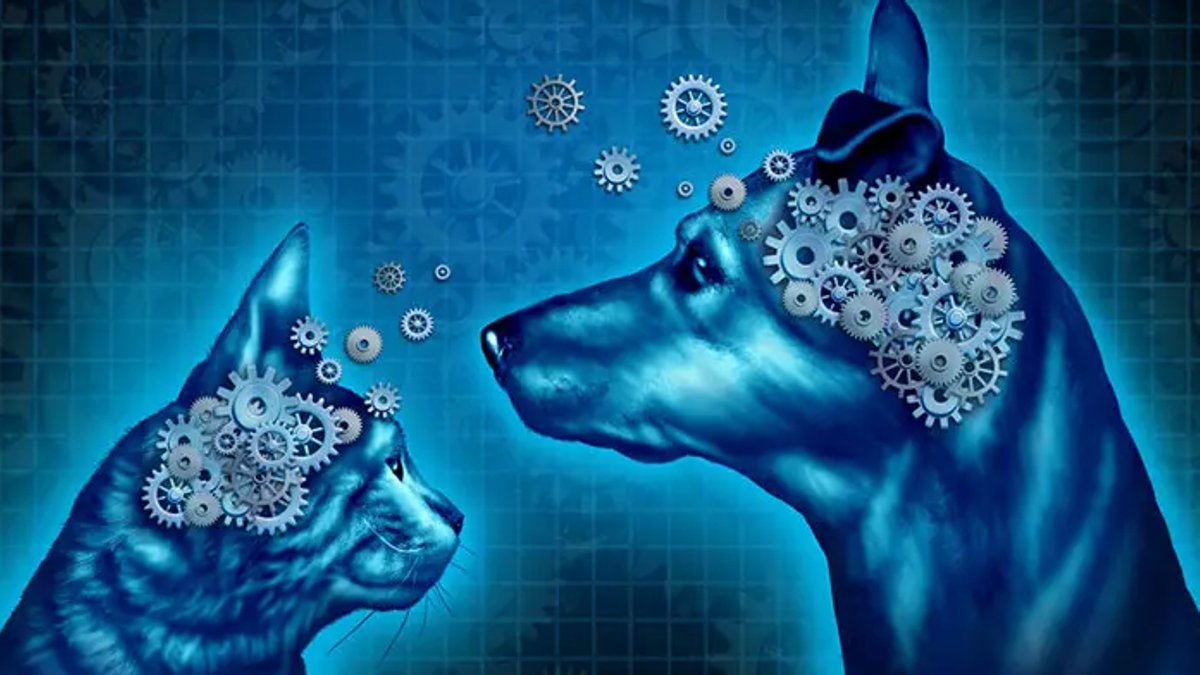
Your senior dog can still trot around the block. Your older cat still jumps to their favorite windowsill. Physically, they seem to be doing okay for their age, but if you look closer, you will see signs that something quieter has changed. You may notice your dog wandering into corners and forgetting why they went there. Or your cat might start crying in the middle of the night, staring at a wall. They pace at night. They seem foggy sometimes, or a little more anxious than they used to be. The body is holding up, but the mind seems to be aging on its own timeline.
This mismatch is more common than most pet parents realize, and as dogs and cats live longer, we are seeing more of it. In dogs, this is called canine cognitive dysfunction, sometimes referred to as “doggie dementia.” Cats have their own version as well. Early signs of cognitive dysfunction can be easy to miss or may be dismissed as “just getting old.” They may include confusion, getting stuck in corners or behind furniture, or standing in the wrong room. Dogs might wander, especially at night, or show increased anxiety or irritability. Cats could have appetite changes, less interest in play, or reduced responsiveness when called by name.
What Lion’s Mane Actually Is
Lion’s Mane is an edible medicinal mushroom native to hardwood forests in North America, Europe, and Asia. It gets its name from its white, shaggy, cascading appearance that looks a bit like a lion’s mane. It has been used in traditional Chinese medicine for centuries to “nourish the gut and calm the mind.” Buddhist monks reportedly drank Lion’s Mane tea before meditation to sharpen their focus. What is newer is the growing body of research trying to understand exactly how it works.
The mushroom contains a set of bioactive compounds that make it interesting for brain health. Two in particular — hericenones and erinacines — are believed to stimulate the production of nerve growth factor, a protein essential for the growth, maintenance, and repair of nerve cells. It also contains beta-glucan polysaccharides, isoindolinones, sterols, and antioxidants that appear to have neuroprotective and anti-inflammatory effects.
Related: Menadione May Cause Liver And Other Organ Damage
While cognitive support is the headliner, Lion’s Mane has a wide-ranging list of other potential effects that make it appealing for senior pets. These include immune modulation, anti-inflammatory and antioxidant properties, gut and digestive support, and support for peripheral nerve regeneration. This is one reason integrative veterinarians increasingly reach for Lion’s Mane in older dogs and cats. It touches many of the systems that quietly wear down with age at the same time.
How It Works and What the Research Shows
Lion’s Mane’s most celebrated action is its ability to support brain health from multiple directions at once. Rather than a singular effect, it appears to work simultaneously on nerve growth, inflammation, oxidative stress, and gut function. Encouraging NGF production helps neurons grow, survive, and repair themselves. In animal studies, Lion’s Mane compounds have been shown to help regenerate myelin along damaged nerve fibers — the insulation that helps nerves conduct signals properly. Lion’s Mane has also demonstrated anti-inflammatory activity in the nervous system and contains antioxidant-rich compounds that may help to neutralize free radicals.
Most of the strongest research on Lion’s Mane comes from preclinical trials, limited human trials, and lab studies in rodents. Direct research in dogs and cats is still emerging. In human trials with adults who had mild cognitive impairment, taking Lion’s Mane daily for 16 weeks led to significantly improved cognitive scores compared to placebo. When subjects stopped taking it, those improvements faded, suggesting consistent use is what maintains the benefit. A separate 12-week clinical trial in humans found that Lion’s Mane safely enhanced cognitive function on memory and recognition tests.
In canines specifically, a 2022 peer-reviewed study fed aged dogs a diet supplemented with Lion’s Mane for 16 weeks. The dogs receiving the mushroom showed meaningful, favorable shifts in their gut microbiome — beneficial bacteria increased and harmful bacteria decreased. Researchers concluded that Lion’s Mane could “regulate the gut microbial community in aged dogs,” with potential downstream benefits for immunity and metabolic health. Formal cognitive trials in dogs are limited so far, but many integrative veterinarians report seeing improvements in their aging patients — better alertness, calmer nights, more engagement — after several weeks of Lion’s Mane.
Related: New guide helps families adopt puppies
This pattern of physical resilience outpacing mental sharpness is a common frustration for pet owners. The disconnect between a pet’s vitality and their behavior creates a unique kind of stress. It is not just that the animal is aging; it is that the aging process feels uneven. While joints and organs may be stabilizing, the neural pathways are beginning to fray in ways that do not show up on a standard physical exam. This creates a pressure to find solutions that address the whole system rather than just the symptoms.
Dosage Basics and Safety
Lion’s Mane has an excellent safety profile in the research so far. Rodent toxicology studies have used extraordinarily high doses for months without adverse effects, and no serious side effects have been documented in dogs, cats, or humans consuming it long-term. When side effects do happen in pets, they are usually mild and short-lived. These can include loose stool or soft stool when first starting, mild digestive upset, or occasional lethargy during the first few days.
Dosing depends on your pet’s size, the concentration of the product, and the reason you are using it. For prevention or general support, a common guideline shared by veterinarians is around 1/4 teaspoon per 10 pounds of body weight, given once daily. For an active health concern, the dose might be 1/2 teaspoon per 10 pounds, given twice daily. For extract capsules, a rough range often used is around 20 to 40 milligrams per kilogram of body weight per day. Practically, that lands at roughly 250 mg to 500 mg for a 25-pound dog, and 500 mg to 1,000 mg for a 50-pound dog.
Mushroom supplements vary wildly in quality. If you are going to use Lion’s Mane, spending a little more on a good product is worth it. Look for products labeled 100% fruiting body rather than mycelium-on-grain. Hot-water and dual extractions pull out the active compounds much more efficiently than raw powdered mushrooms. A quality Lion’s Mane product will disclose its beta-glucan percentage, ideally somewhere in the 20% to 40% range. Check for organic sourcing and independent testing for heavy metals and microbial contamination.


