
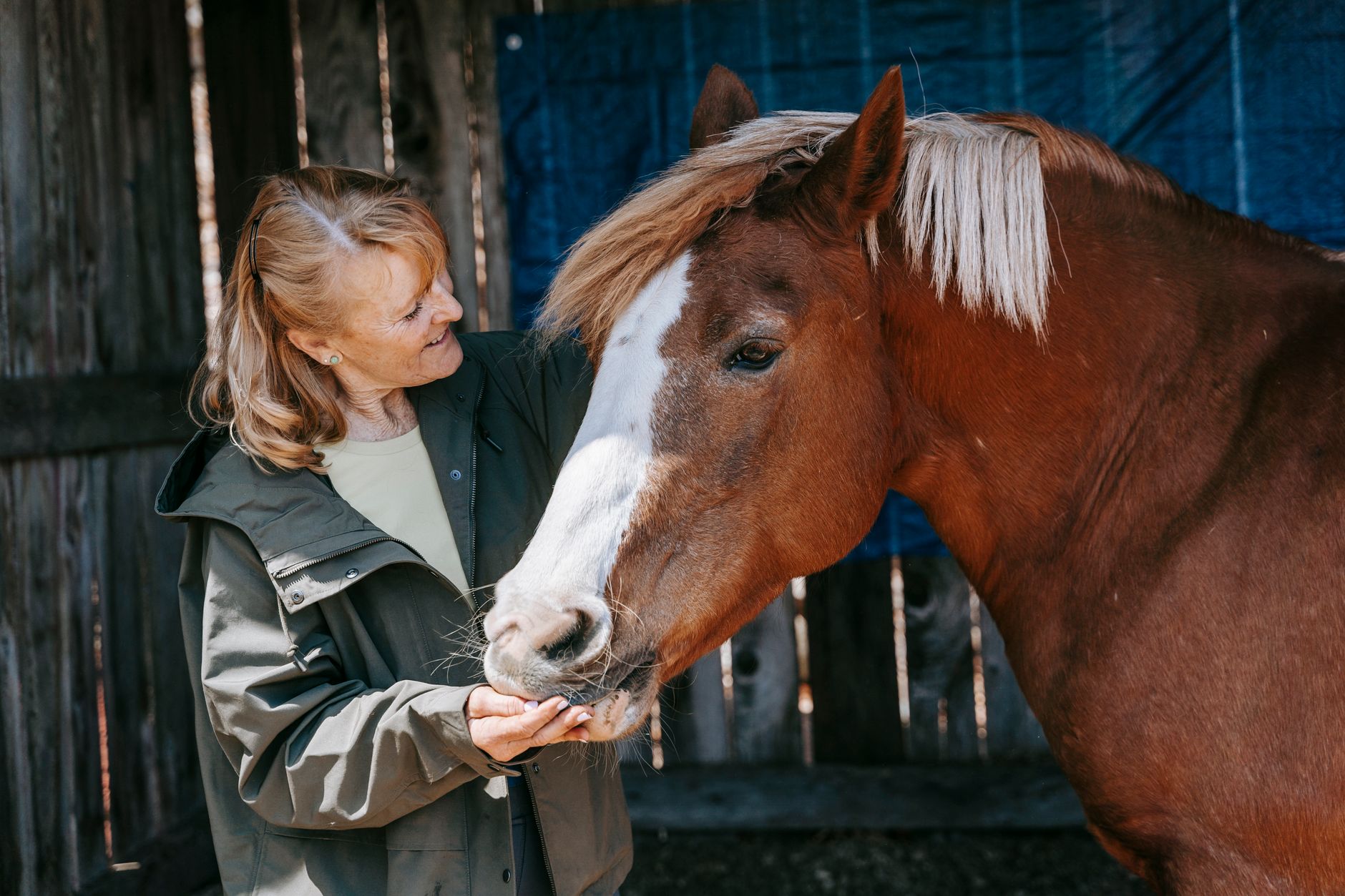
Horses have spent thousands of years alongside humans, but new research shows they don’t just tolerate our presence—they actively seek our help when needed.
A study from Kobe University in Japan revealed that horses use deliberate signals to communicate with caretakers when faced with a problem they can’t solve alone. In the experiment, researchers placed carrots under a bucket the animals couldn’t access without assistance. When humans entered the area, the horses didn’t remain passive. They made direct eye contact, stayed nearby, and nudged the people, behaviors that lasted much longer than when no food was hidden.
Horses Adjust Their Signals Based on Human Awareness
The study also tested whether horses changed their behavior depending on whether caretakers knew about the hidden food. The animals did. When humans hadn’t seen the carrots being placed, the horses increased their signaling—looking, nudging, and staying close more persistently. This indicates horses don’t communicate randomly; they adjust their requests based on what they think humans understand.
Scientists concluded this ability likely developed during domestication, which began around 6,000 years ago. For those who work with horses, the findings confirm what many already suspected. The animals form deep bonds with humans, and the study provides clear evidence of their social intelligence.
Related: Frequent bathroom breaks may signal health issues
This isn’t the first time horses have shown they understand human cues. Earlier work from the University of Sussex demonstrated that horses can tell happy from angry facial expressions in photographs. When shown images of angry faces, they tended to look with their left eye, a response linked to processing threats in the brain’s right hemisphere. Their heart rates also rose when exposed to negative expressions, proving they don’t just recognize emotions—they respond to them.
Horses Read Each Other’s Faces, Too
Horses don’t just interpret human emotions; they also read one another. A different study found they can distinguish between positive and aggressive expressions in other horses. When shown photos of relaxed horses, they were more likely to approach. When faced with aggressive expressions, they avoided them, and their heart rates reflected the change in mood.
The ability to read faces isn’t limited to primates. Horses, despite being evolutionarily distant from humans, use expressions to gather information and manage social situations. This ability helps explain why they’re so sensitive to human behavior, sometimes mirroring stress or comforting distressed herd members.
For centuries, horses served as more than just tools for labor or transportation. They carried soldiers into battle, pulled plows, and raced for entertainment. Their role has since changed. Equine-assisted therapy programs are available for people with a range of conditions, including depression, anxiety, autism, and dementia.
Related: Experts Warn Pets About Kiwifruit Risks
The bond between humans and horses may be more mutual than once believed. Riders learn to interpret their horses’ subtle signals, while the animals, in turn, respond to their handlers’ moods and movements. The result is a partnership that feels natural, built on thousands of years of shared experience.
That history hasn’t always been kind. Horses were hunted for meat in the Paleolithic era, and millions perished in wars. Yet over time, the relationship shifted. What began as purely practical became something deeper—a connection that, as recent studies confirm, works both ways.
These findings challenge the idea that only certain animals can form complex social bonds with humans.


