
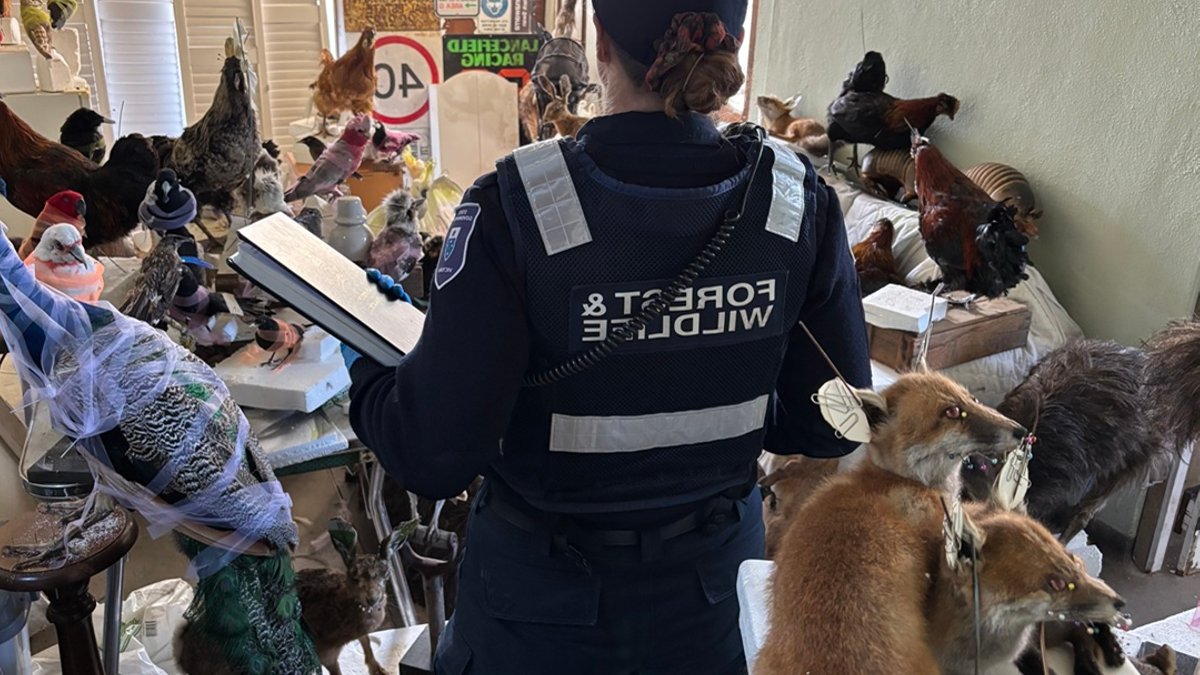
A Kyneton resident has been ordered to pay a $10,000 penalty after authorities discovered over 700 deceased native animals at his residence and antique shop.
During a court appearance at Kyneton Magistrates’ Court, the 74-year-old entered a guilty plea to various counts involving wildlife, pests, and welfare issues. Charges against him covered the unlawful sale of wildlife, possession of protected species, and capturing animals without a permit.
The judge emphasized that the haul included many threatened and famous species, labeling the magnitude of the crime as significant.
“It is bewildering that a man of your intelligence and knowledge and love of wildlife would arrogantly flout the law so comprehensively,” the Magistrate remarked.
When determining the sentence, the judge considered factors such as the defendant’s age, his clean criminal record, his early admission of guilt, and his financial constraints.
The investigation began in April 2025 after Conservation Regulator officers executed search warrants on both locations. During a four-day search, officers uncovered taxidermied specimens throughout the house and business, alongside numerous frozen carcasses stored in 14 freezers.
Charges were filed regarding over 700 native birds, reptiles, and mammals. This inventory included 78 emus, 42 brushtail possums, and 26 echidnas. Additionally, remains of protected species like the barking owl, diamond python, and Murray River short-necked turtle were recovered.
Searches also revealed 15 live reptiles in cages, comprising native snakes and turtles, as well as North American red-eared slider turtles and corn snakes. Six of the native reptiles were found living in environments that breached animal welfare rules.
Under the Catchment and Land Protection Act 1994, keeping red-eared sliders and corn snakes is illegal in Victoria because they are classified as prohibited pests.
Cal Heppell, Director of Regulatory Operations for the Conservation Regulator, stated that the severity of the offenses proves the necessity of strict wildlife safeguards.
Victoria’s Wildlife Act 1975 mandates that all wildlife is protected. Consequently, taking, destroying, or keeping wildlife without approval is prohibited.
“These requirements are not optional. Anyone who keeps, trades or possesses wildlife must comply with the law,” Heppell added.


