
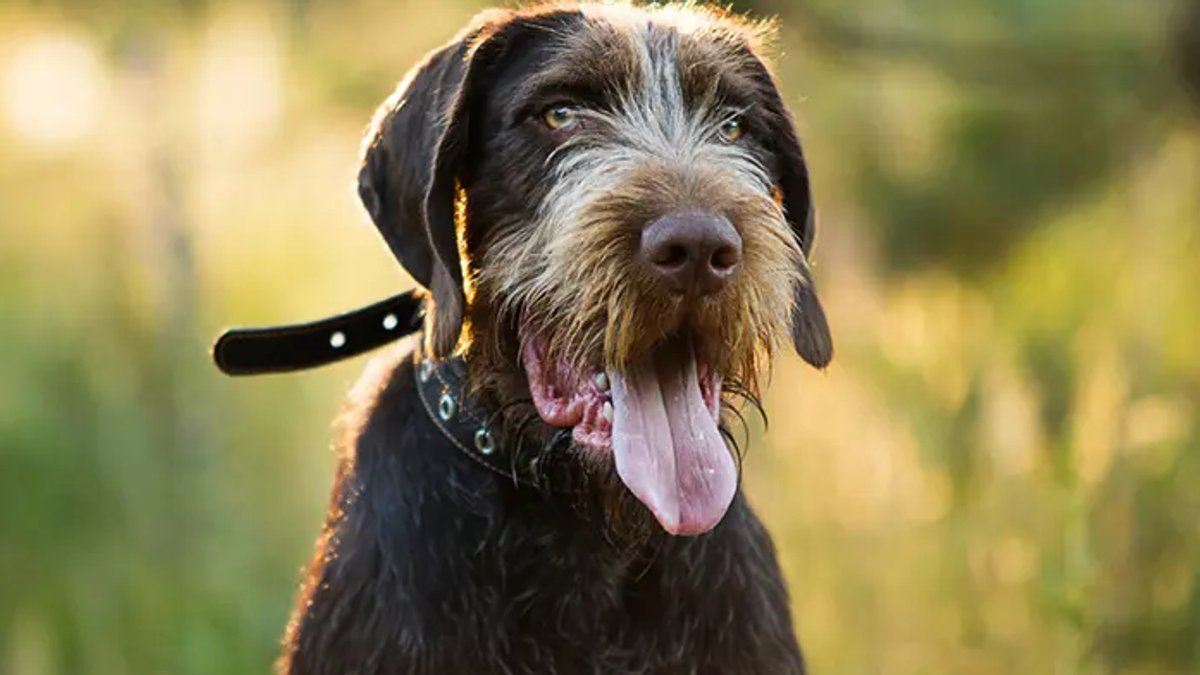
German wirehaired pointers, or GWPs, were originally bred to be multi-taskers capable of scenting, pointing, and retrieving game on land or in water. This breed, which belongs to the sporting group, was developed to withstand harsh weather and intense physical work. Officials say the dogs were carefully mixed from a foxhound, a pointer, and a standard poodle to create a versatile animal with the Deutsch Drahthaar name. It took until 1959 for the American Kennel Club to officially recognize the breed, though its roots in Germany date back to 1870.
Hardy and High-Energy
Adults of this breed stand 22 to 26 inches at the shoulder and can weigh anywhere from 45 to 75 pounds. Their coat is water-repellent and tough, designed to protect them in the elements. The coloring usually involves a mix of liver and white, spotted, roan, or ticked patterns. While puppies might have softer, silkier fur, adults shed very little. Owners often choose to clip the coat rather than deal with the tedious process of hand-stripping dead hair, a task usually done in spring and fall with the right tools.
Vet Street describes this dog as a “multitasker par excellence” and an active, complex animal with special needs. These dogs require a lot of stimulation. Without enough exercise or mental engagement, they can become noisy or destructive. A suburban or rural home with a large yard works best for them, as they thrive on tasks like obedience classes, agility courses, and even search and rescue work. They enjoy hiking, running, and camping, but they need clear rules and consistent attention.
Related: Reunited pets and grateful owners
Because they are so smart, these dogs can pick up new tricks quickly. They respond well to praise and food rewards, which makes training easier. However, they also have an independent streak and a strong will. They might go off on a tangent if they get bored, so owners must keep them focused. If they are given a job to do, like playing memory games or fetching items, they are eager to please.
Training and Socialization
Early socialization is critical for this breed. Experts recommend starting when the puppy is 8 weeks old rather than waiting until they are six months old. Waiting too long can lead to bad habits that are much harder to break. Socialization classes are encouraged throughout the first year of life. If they aren’t properly socialized, German wirehaired pointers may not do well with strangers, other animals, or children.
They can be friendly with children if they are raised with them, but older dogs meeting children for the first time will need supervision. With other dogs, they usually do well, but their instinct to chase small animals can be a problem. If you have cats or other small pets, you should keep the GWP separated from them until you are certain of the dog’s reaction. They may simply view these smaller animals as prey.
Related: New guide helps Lhasa Apso adopters
Owners should be aware that these dogs make excellent watchdogs. If they aren’t familiar with human guests, they can be unfriendly. Because of their need for outdoor play and tendency to bark, they likely won’t do well in an apartment setting. They need at least an hour of strenuous exercise every day to stay happy and healthy.
Health Considerations
While German wirehaired pointers generally lack major breed-specific health predispositions, veterinarians have identified certain conditions that can affect them. Hip dysplasia is a disorder that occurs in the breed, along with entropion and progressive retinal atrophy, which impact vision. Another common issue is von Willebrand disease, a bleeding disorder that affects about 50 different breeds. Symptoms may not appear until a traumatic injury occurs, such as a dog fight or accident, though the condition is present from birth.


