
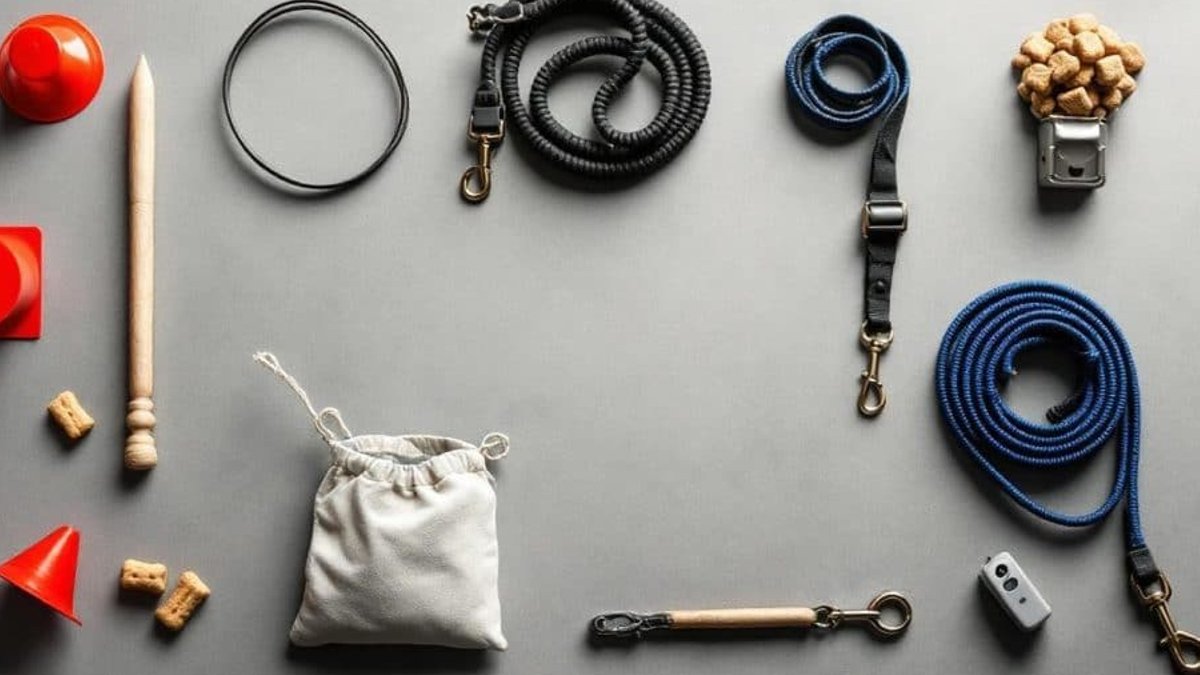
Choosing the right tools can make the difference between stalled progress and steady improvement in dog obedience training. Trainers who match equipment to a dog’s age and skill level report smoother sessions and clearer communication.
Collars and Leashes for Every Phase
For puppies under sixteen weeks, a flat collar provides gentle support and avoids pressure on a developing neck. Once basic commands are reliable, many handlers switch to a martingale collar, which tightens slightly only when the dog pulls, offering feedback without choking.
Competitors in AKC Utility tests often prefer limited-slip collars for precise work such as the Signal Exercise. Chain choke collars are discouraged because they can damage trust and pose safety risks.
A six-foot leash is the standard length for obedience drills. It gives the dog freedom to move while keeping the handler in control during heel work and recall. Longer lines—fifteen or thirty feet—are reserved for open-field distance training.
Leash material matters. Cotton and leather tend to develop a comfortable grip and resist rope burn, whereas nylon wears faster under repeated tension. A half-inch width distributes pressure evenly; thinner leashes can dig into the hand during strong pulls.
Proper fit prevents distraction. The collar should allow two fingers to slide between it and the neck. Weekly checks are essential for growing puppies, and monthly inspections of leather collars catch cracks before they cause failure in competition.
Treats, Clickers, and Feeding Adjustments
High-value treats are essential for rapid learning.
Related Post: Dogs thrive with interactive play toys
Treats should be pea-sized or smaller to avoid chewing delays during exercises like the Signal Exercise. Rotating three to five flavors weekly prevents habituation and keeps motivation high.
Healthy options such as small carrot or apple pieces can be used for low-intensity rewards.
Clicker training marks the exact moment a behavior is performed. A stainless-steel clicker produces a clear, consistent sound that travels across a field, making it more reliable than verbal cues.
When teaching sit, the click should occur the instant the rear contacts the ground, followed by a treat before the dog stands. For recall, click the moment the dog’s eyes lock on the handler or the front paws move forward.
Using a treat pouch from J&J Dog Supplies or 5.11 Tactical keeps rewards within reach, allowing the click-treat sequence to stay under one second. On heavy-training days, reducing regular meals by fifteen to twenty percent helps control weight gain from frequent treats.
These adjustments shape a training environment where the dog can focus on cues rather than food excess. By keeping the reward system efficient, handlers notice quicker responses and less fatigue during long practice sessions.
Interactive Toys for Skill Development
Fetch items serve as active breaks between precision drills, allowing dogs to release energy without losing focus on upcoming commands. Durable rubber balls withstand repeated throws, preventing debris from littering the training area.
During the Moving Stand exercise, a well-timed fetch encourages the dog to hold position until released, reinforcing impulse control. Rotating two or three different toys each week maintains novelty and keeps motivation high.
Read Also: Why Dogs Dominate Social Media Comedy
Puzzle devices require the dog to solve a simple problem before receiving a reward, building confidence for scent discrimination tasks. Incorporating one puzzle session for every three precision drills balances mental conditioning with skill practice.
Tug implements provide a short, controlled outlet for drive, especially in high-energy dogs. Initiating and ending each tug round with clear verbal cues establishes leadership while strengthening jaw muscles useful for article retrieval.
Structured tug sessions follow demanding exercises such as Directed Jumping, rewarding effort and reinforcing the handler’s authority. When the game concludes promptly, the dog learns to transition back to obedience work without lingering arousal.
Affiliate Disclosure and Equipment Philosophy
“This post contains affiliate links, and I will be compensated if you make a purchase after clicking on my links.” DogingtonPost notes that having the right tools is essential for training success for readers.
Organizing Equipment for Consistent Focus
Separating toys from the primary training zone prevents anticipation that can distract dogs during precision work. Storing all play items in a dedicated bag keeps the training environment cue-clear.
Regular inspection of leashes and collars identifies fraying or cracked hardware before failure occurs in competition. Stainless-steel fittings resist rust, ensuring reliability through wet or outdoor sessions.
Leather leads develop a comfortable grip over time and avoid rope burn when a dog pulls suddenly, offering a long-lasting option for advanced phases. Replacing worn lines promptly eliminates safety hazards during directed retrieve drills.


