
Scientists have completed an unprecedented two-year project that mapped the evolution of insects, revealing how these creatures shaped life on Earth over hundreds of millions of years. The collaboration involved more than 100 researchers from 10 countries and was published in the journal Science in November 2014. The findings offer a detailed reconstruction of how insects diversified and adapted across geological time, answering longstanding questions about their role in planetary ecosystems.
Ancient Origins of Insect Life
According to the research, insects arrived on Earth at the same time as the earliest land-dwelling plants — roughly 480 million years ago. This timing suggests that insects and plants worked together to build the earliest earthbound ecosystems, laying the foundation for terrestrial life as we know it. The study indicates that these early interactions between plant and insect life were key in shaping the ecological systems that would later support dinosaurs, mammals, and eventually humans.
Related: Researchers Reveal House Cats’ Hidden Wild Side
Surprising Continuity Across Time
One of the most striking findings concerns the appearance of insects living alongside dinosaurs. Despite the vast span of time separating those ancient creatures from modern species, researchers discovered that insects from the Jurassic period would look remarkably familiar today. Karl Kjer, a Rutgers professor in the Department of Ecology, Evolution, and Natural Resources, explained that entomologists would recognize and properly classify most Jurassic insects using modern taxonomy. “Many of them would look very similar to what we see today,” Kjer said.
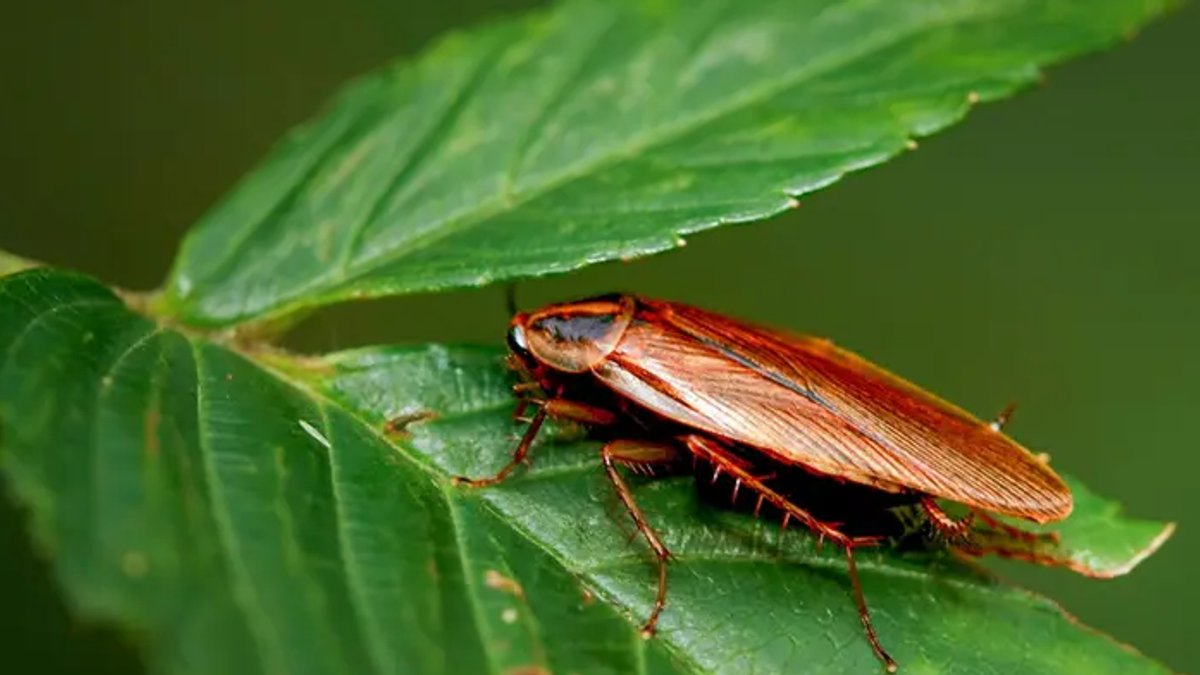
This continuity extends to specific lineages. Silverfish, considered among the oldest insects on Earth, first appeared around 420 million years ago — before insects had developed wings. Their modern descendants, emerging roughly 250 million years ago, look nearly identical to those ancient pioneers. Dragonflies and damselflies followed about 406 million years ago, though they differed from today’s versions by having visible antennae. Cockroach lineages stretch back 230 million years, with some varieties more closely related to termites than to other cockroach species.
Crickets, katydids, and grasshoppers share a common ancestor that lived just over 200 million years ago. These insects were present on Earth before grass itself evolved, demonstrating how ancient lineages can persist and diversify over geological timeframes that dwarf human history.
Related: Urgent Brain Function Alert for Beloved Pets
Ecological Importance Across Eras
Dr. Bernhard Misof of the Research Museum Alexander Koenig — Leibniz Institute for Animal Biodiversity in Bonn, Germany, emphasized the significance of understanding insect history. “Insects are the most species rich organisms on earth,” he said. “They are of immense ecological, economic and medical importance and affect our daily lives, from pollinating our crops to vectoring diseases.” Misof noted that reconstructing how insects are related is essential for grasping their enormous species richness and ecological importance.
The study demonstrates that insects have been integral to Earth’s ecological systems since the beginning of terrestrial life. Their ability to adapt across hundreds of millions of years while maintaining recognizable physical forms suggests a remarkable evolutionary stability. As researchers continue to analyze the data from this project, scientists hope to apply this understanding to pressing modern challenges, from protecting pollinators essential to food production to controlling disease-carrying species that affect human health.


