
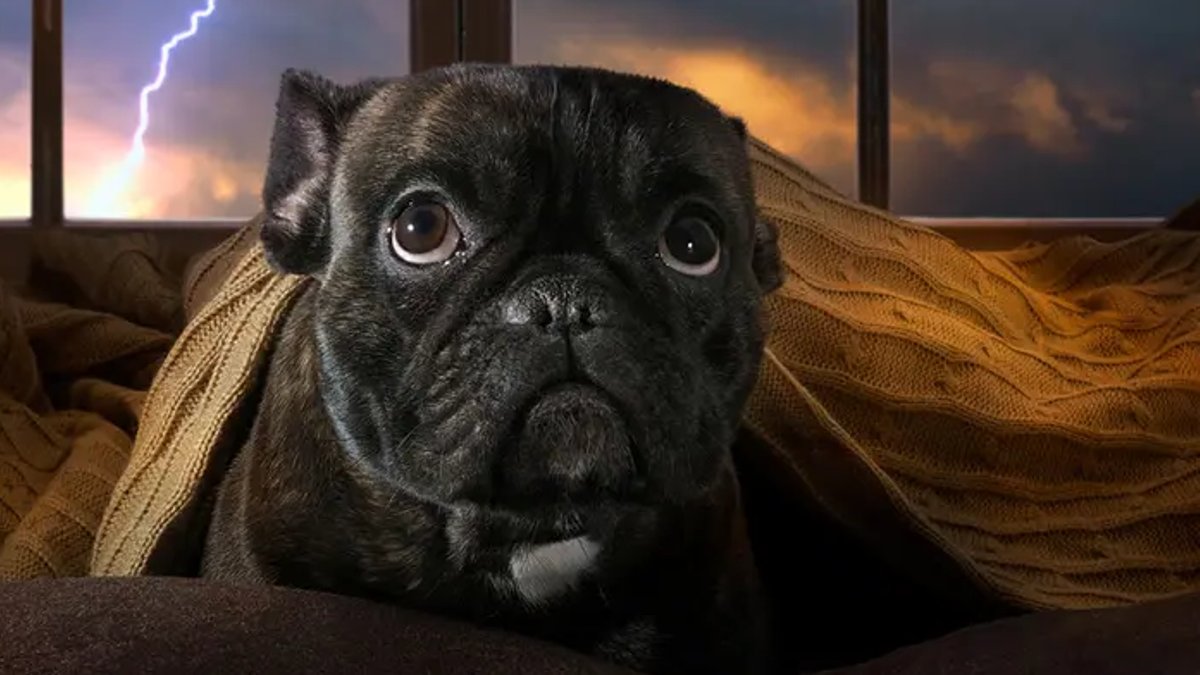
An estimated 25% to 50% of dogs develop noise anxiety during thunderstorms. The fear stems from more than just sound—shifting air pressure, static buildup in their fur, and even the scent of rain can trigger panic.
Dogs hear thunder long before humans do because of their sensitive hearing. Certified trainer Trista Miller explains that fear of loud noises is an ingrained survival instinct. Storms add extra stressors, including changes in barometric pressure that some dogs detect before the first raindrop falls, and static electricity that can make their fur crackle.
Larger breeds or those with thick double coats are more likely to experience static buildup. When their nose touches metal, like a doorknob or food bowl, they might feel a small shock. This reaction explains why some dogs bolt for bathrooms or basements during storms. Plumbing and porcelain fixtures help dissipate the charge, making those spaces feel safer.
Without intervention, storm anxiety often worsens over time and can take a toll on both your dog’s health and quality of life.
Subtle signs your dog is anxious before the storm hits
Dogs rarely show obvious panic at first. Clinical behaviorist Terry Curtis identifies early stress signals that owners often overlook: sudden yawning unrelated to tiredness, frequent lip-licking, or wide, alert eyes. Ears pinned back and a tucked tail are classic fear indicators, signaling an attempt to appear smaller.
Related: New Series Offers Amazing True Stories
These signs may appear before the storm arrives. If noticed early, guiding the dog to a quiet, familiar space may prevent anxiety from escalating. A den-like area—a crate, closet, or bathroom—can provide comfort, especially if lined with their favorite bedding or toys.
Not all storm-related fear stems from behavior. A sudden sensitivity in a dog that previously ignored storms could indicate an underlying health issue, such as pain, heart disease, or a neurological problem. Veterinarians recommend ruling out medical causes before assuming anxiety is the sole issue.
Chronic stress from storms can harm a dog’s overall health. Some dogs become so frantic they injure themselves trying to escape, damaging teeth or paws in the process.
How to help your dog weather the storm
No single solution works for every dog, but combining strategies often yields the best results. Start by creating a safe space—let the dog choose where they feel most secure, whether it’s a crate, closet, or bathroom. Blocking out lightning with curtains and masking thunder with white noise or classical music can reduce sensory overload.
Chewing and licking naturally calm dogs. A lick mat with xylitol-free peanut butter or a stuffed food toy can redirect nervous energy. Anxiety vests, which apply gentle pressure, may help some dogs feel more secure, but owners should introduce them well before a storm to avoid adding stress.
Related: Ancient plant may ease joint pain in older adults
A brisk walk or play session before a storm can tire them out, making it easier to settle when the weather turns. Experts agree that comforting a dog during a storm doesn’t worsen their anxiety. Fear is an involuntary response, not a behavior that affection reinforces.
If these measures fall short, a veterinarian can recommend behavior-modification techniques or additional treatments. The goal isn’t to eliminate fear entirely but to help dogs manage it better over time.
Storm anxiety can be controlled, even if it never fully disappears. Recognizing a dog’s triggers and adjusting their environment helps. That might mean leaving the bathroom door open, playing soft music, or simply sitting with them until the storm passes.
What works for one dog may fail for another. Some prefer physical reassurance; others need space. Observing their cues—and acting before panic sets in—makes a difference when the next storm arrives.
Owners should also consider long-term solutions. Consistent routines and early intervention can reduce the severity of anxiety over time. For severe cases, medication or professional training may be necessary.


