
A cat’s ability to sniff out deception—even in a detective—has been a staple of cinema for decades. In The Long Goodbye (1973), private investigator Philip Marlowe learns this lesson the hard way. After running out of his cat’s preferred Courry Brand food, he tries to pass off a cheaper substitute in the original packaging. The cat rejects it immediately, leaving Marlowe stranded mid-investigation. The moment stands out as one of the few times a pet outsmarts a human lead, though it is hardly the only instance where cats have stolen scenes in film.
Cats have appeared in movies almost since cinema’s earliest days. In 1894—just five years after the first public film screening—Edison Studios released The Boxing Cats, a short film showing two feline fighters in miniature gloves. The clip remains popular today, with over 644,000 views on YouTube, proving early audiences had an appetite for feline antics. Since then, cats have taken on every conceivable role: heroes, villains, sources of comedy, and even plot catalysts. Some films center entirely on their antics, while others use them as symbolic reflections of human emotions.
When the cat food becomes the star
In some stories, the cat’s food itself becomes the real focus. Beyond Marlowe’s failed deception, National Lampoon’s Christmas Vacation (1989) turns cat food into a holiday disaster. Aunt Bethany mistakenly prepares a Jell-O mold filled with dry kibble for dinner, and the family only realizes their error after taking bites. Cousin Eddie, ever the optimist, keeps eating without objection. The scene highlights how deeply cats influence human behavior, even when they are not on screen.
In District 9 (2009), cat food takes on a darker significance. The alien Prawns trade with humans using cans of Fancy Feast, treating it as a luxury item. When the protagonist, Wikus, begins transforming into one of the creatures, his sudden craving for the food becomes a visible sign of his mutation. The film uses pet food as both a commodity and a metaphor, linking it to survival and identity.
The cat food subplot extends beyond comedy or horror; it is a recurring detail that reveals character. Marlowe’s failure with his cat exposes his own flaws. The Christmas Vacation family’s horror reflects their dysfunction. Wikus’s appetite signals his descent into the unknown. These moments demonstrate that even inanimate objects like cat food can carry meaning in storytelling.
Heroes, sidekicks, and the cats who save the day
Not all feline roles revolve around food or deception. Some cats actively participate in the plot, using their instincts, or supernatural abilities, to guide humans. In D.C. — That Darn Cat! (1965), a Siamese named D.C. stumbles upon evidence linking a kidnapping to a local criminal. His sharp eyes and wandering nature make him an unlikely but effective detective. The film reinforces the trope of cats as natural investigators, a role that persists in modern thrillers.
Other cats defy species boundaries entirely. The Incredible Journey (1963) follows a Siamese named Tao on a 2,000-mile trek through Canadian wilderness alongside two dogs to reunite with their owners. The film’s survival themes hinge on the cats’ resilience, proving that even non-human animals can drive a narrative. Meanwhile, The Cat from Outer Space (1978) flips the script: Jake, an alien feline, uses advanced technology to outsmart Earthlings while trying to return home. His intelligence contrasts sharply with the humans around him, making him both a hero and a critique of human limitations.
Related Post: Electronic nose predicts cats’ food preferences
Some cats serve as emotional anchors. In Harry Potter and the Prisoner of Azkaban (2004), Crookshanks, Hermione Granger’s ginger tabby, senses something amiss about Ron’s rat, Scabbers, long before the humans do. His instincts become a turning point in the plot, reinforcing the idea that animals often perceive truths humans overlook. The cat’s role deepens the story’s themes of perception and trust.
Even in action films, cats add layers. In Captain Marvel (2019), Goose appears to be an ordinary orange tabby, until it is revealed to be a Flerken, an alien species capable of digesting large objects and, in a key scene, injuring Nick Fury. The twist subverts expectations, turning a seemingly harmless pet into a plot device with cosmic stakes. Similarly, A Quiet Place: Day One (2024) features Frodo, a cat that survives an alien invasion alongside human characters, grounding the horror in quiet companionship.
Even in comedies, cats occasionally take on antagonistic traits. In Stuart Little (1999), Snowbell, a Persian cat, initially plots with other felines to eliminate Stuart, the family’s mouse-sized human. His betrayal is short-lived, however, as he eventually sides with Stuart against the villainous rats. The cat’s shift in allegiance shows the film’s themes of loyalty and unexpected alliances. Unlike cartoon villains, these live-action cats rely on cunning rather than outright malice, making their roles more ambiguous.
Cats as comic relief and plot catalysts
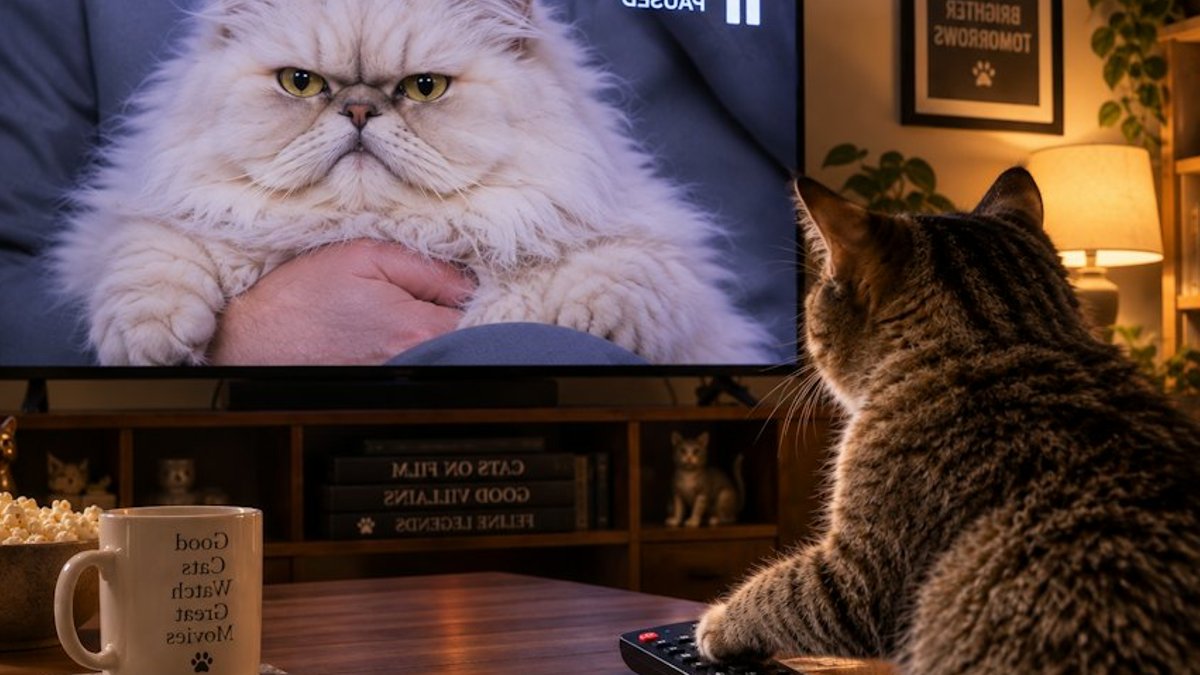
Cats in films often steal scenes without speaking. Mr. Bigglesworth, Dr. Evil’s hairless cat in Austin Powers: International Man of Mystery (1997), parodies the iconic white Persian associated with James Bond villains. His deadpan expressions and exaggerated reactions to absurd situations amplify the film’s satire, proving that even silent characters can deliver humor. Similarly, Mr. Jinx in Meet the Parents (2000) becomes an obstacle in Greg Focker’s already chaotic attempt to impress his future in-laws. The toilet-trained Himalayan’s presence adds another layer of tension, blending comedy with the film’s broader themes of family expectations.
Some cats serve as the entire premise for a movie. In Rhubarb (1951), an eccentric millionaire’s will leaves his professional baseball team to a stray cat, setting the stage for the film’s quirky narrative. The cat’s sudden inheritance becomes the catalyst for a series of misadventures, proving that even the most unlikely characters can drive a plot. Meanwhile, Keanu (2016) follows two men who enter the criminal underworld after their kitten is stolen, blending dark humor with a lighthearted premise. The cat’s disappearance becomes the inciting incident, demonstrating how a pet’s fate can reshape human lives.
Cats as companions and symbols
Beyond action or comedy, cats often reflect deeper truths about their human counterparts. In Breakfast at Tiffany’s (1961), Holly Golightly’s refusal to name her orange tabby shows her fear of attachment. The cat’s eventual disappearance in the rain becomes a metaphor for her own emotional isolation, tying the feline’s fate to the film’s themes of loneliness and longing. Similarly, in Harry and Tonto (1974), an elderly man’s journey across America with his orange cat, Tonto, highlights their shared solitude. The cat becomes more than a companion; he represents the man’s connection to a life he can no longer reclaim.
The Godfather’s unscripted cat, placed in Don Vito Corleone’s lap during filming, became one of cinema’s most enduring images. Though the feline does little beyond purring, its presence in the opening scene reinforces the contrast between Corleone’s calm demeanor and the violent world he inhabits. The cat’s silent companionship grounds the film’s power relations, proving that even minor details can carry weight. Meanwhile, Jonesy, the ship’s cat in Alien (1979), becomes a symbol of resilience. His survival alongside Ellen Ripley shows the film’s themes of endurance, offering a rare moment of warmth in an otherwise bleak narrative.


